
Politics & Positions
Student movements in France
By Cem Colak
09.11.2026, 4 Min. reading time
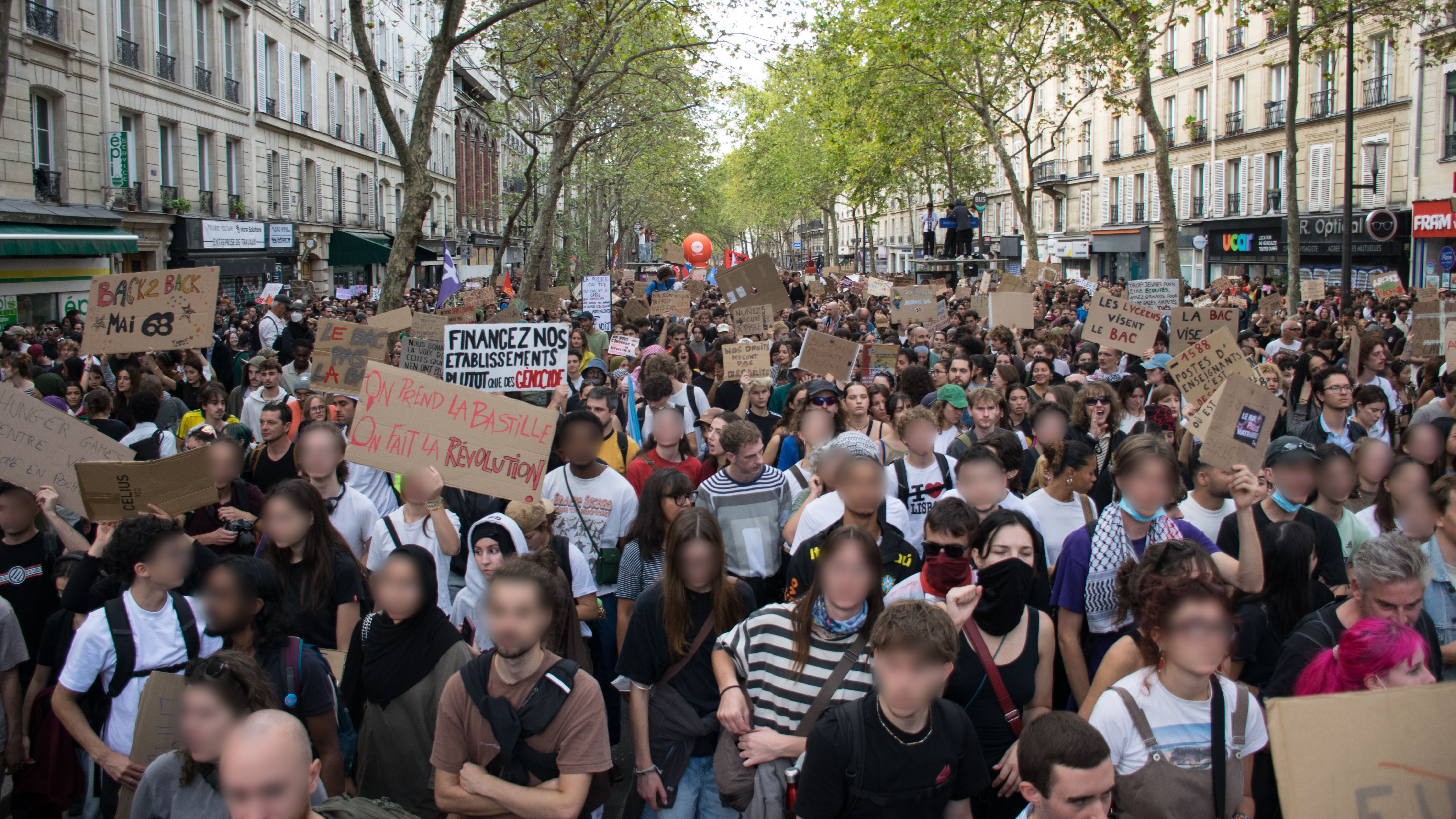
"If we stop now, we’ll be forgotten amidst all these headlines."
These are the words of my flatmate regarding the current protests in France. There is currently an atmosphere of despair amongst students in France that has not been seen for a long time. Since mid-September, students have been joining forces with school pupils to draw attention to their precarious situation and fears for the future. Headline after headline has piled up in recent weeks, after school pupils, teachers, the fire service, the ‘Yellow Vests’ and the media managed to dominate the public debate. Meanwhile, the students were left with nothing but a place on the back benches of that debate.
Studying, a part-time job and running the household: where on earth is there any time left to actually live?
Studying in France differs from studying in Germany, particularly because it is much more school-like and students have far more compulsory attendance requirements than their German counterparts. Alongside their studies, one in two students has to work to support themselves. The massive rise in the cost of living has pushed students’ already difficult circumstances to the limit. Financial support is available, but it is not enough to cover the costs of studying. The French equivalent of BAföG (CAF+BCS) has remained virtually unchanged for the past three years. Furthermore, one in four students is based in Île-de-France – the most expensive region in France. At the same time, one in two undergraduates moves away from home to study and therefore also has to manage a household and other commitments. This leaves little room for a private life. Psychological pressure, a lack of a social life and financial difficulties are just a few of the symptoms of the situation facing students.
From organisation to movement: How students sparked the ’68 movement
The first recognised nationwide student organisation was the UNEF (Union Nationale des Étudiants de France), founded in 1907. At that time, academic education was increasingly the preserve of the more affluent classes, meaning there was as yet no deep connection with the wider population and politicisation was more of a by-product of their activism. This changed in the decades that followed. The UNEF grew and began to become strongly politicised from the late 1950s onwards – primarily as a result of the Algerian War. It moved closer to the Socialist Party and, amongst other things, took a stand against the government’s ongoing colonial practices. This period paved the way for students to play a responsible role in shaping the political future of education and the younger generations. Thus, in May 1968, students sparked the largest strike in French history. What began as a critique of overcrowded lecture theatres and precarious conditions culminated in a national general strike involving over 10 million protesters.
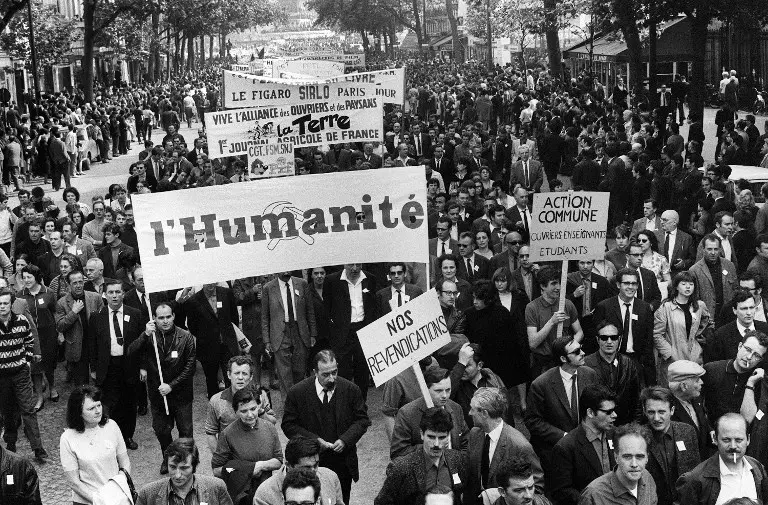
Reforms followed. In the years that followed, many different independent movements emerged from the UNEF. Today, France has a vibrant and diverse landscape of student organisations. They play a part in the decision-making processes of the French student services organisations and the Ministry of Education.
Student movements as a form of resistance against political negligence
In 1986, the French government introduced measures to restrict the traditionally unrestricted access to traditional universities in order to regulate the rush to enrol on certain degree programmes. To this end, it intended to introduce selection criteria, which the universities themselves would be allowed to set. This mechanism was abandoned due to resistance from student movements. Another example: in January 2006, the ‘CPE Bill’ was proposed, which would have allowed employers to dismiss workers under the age of 26 in companies with more than 20 employees immediately and without notice within the first two years of employment. At least 450,000 students and school pupils responded with mass protests.
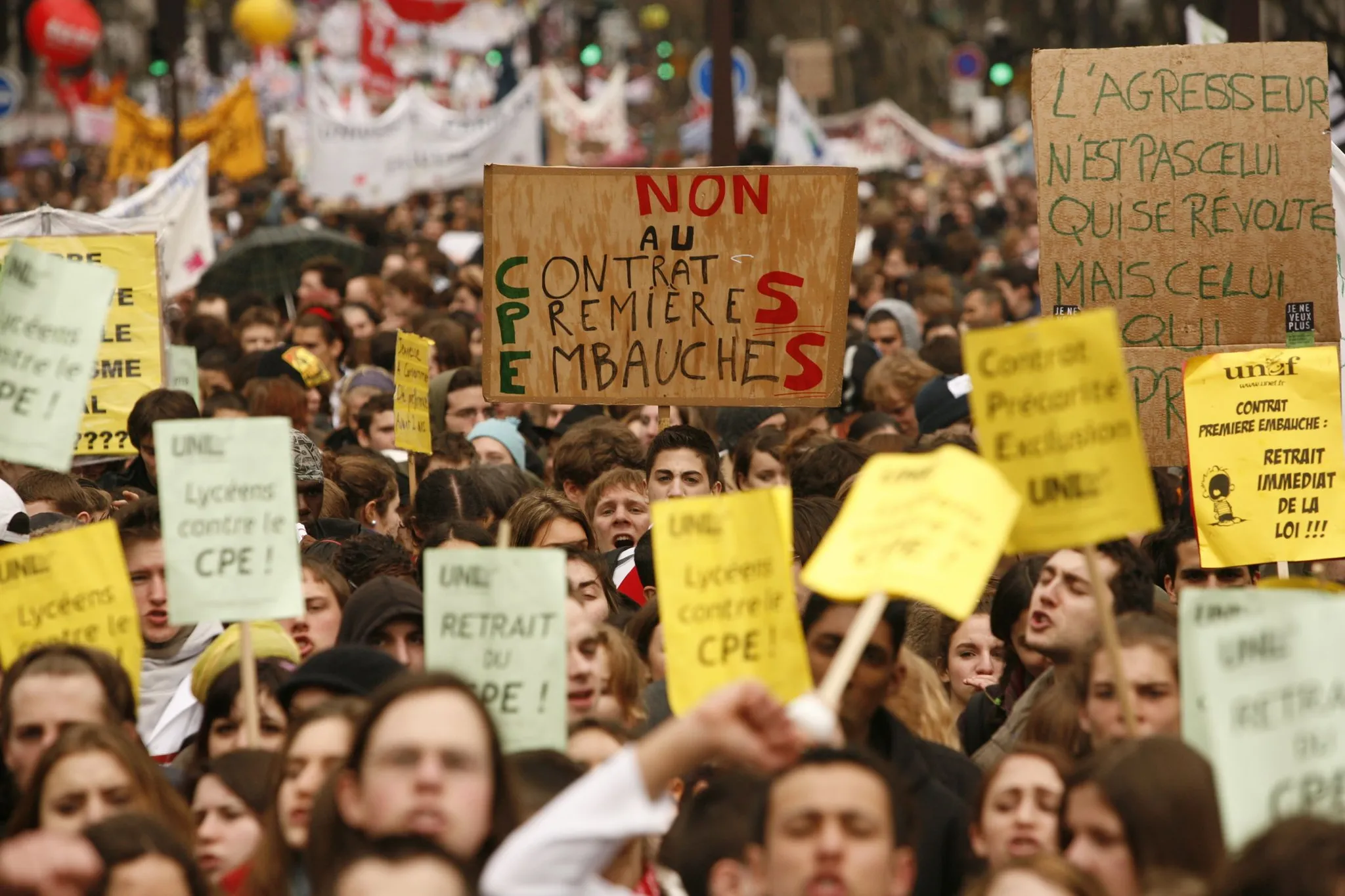
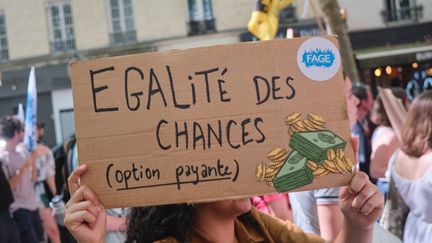
This was followed by a wide range of actions, such as blockades of universities, which ultimately led to the law being repealed. However, not all protests have been successful. Despite the resistance, the application platform ‘Parcoursup’ – similar to the German ‘Hochschulstart’ – was launched in 2018. The protracted and opaque selection process is viewed particularly critically. In the months leading up to their admission to university, students find themselves in a state of profound uncertainty, which severely undermines their ability to plan ahead.
The government’s response left a bitter aftertaste
On 26 October, the government issued a response. Parcoursup is to be completely overhauled and made transparent from 2028 onwards. Financial support for students is to be adjusted retrospectively in line with inflation. Universities are to be modernised by 2031. These are promises intended to be carried over to the next government from 2027 onwards. It is a political ploy to exploit the current situation for the sake of re-election and to shift responsibility onto the future. That is why the protests will continue in the coming weeks, albeit in the face of resistance from the current government.
When will this political struggle come to an end? Will the students grow weary of the political struggle, or will the current government agree on a course of action? We can only wait and see, whilst remaining hopeful.